

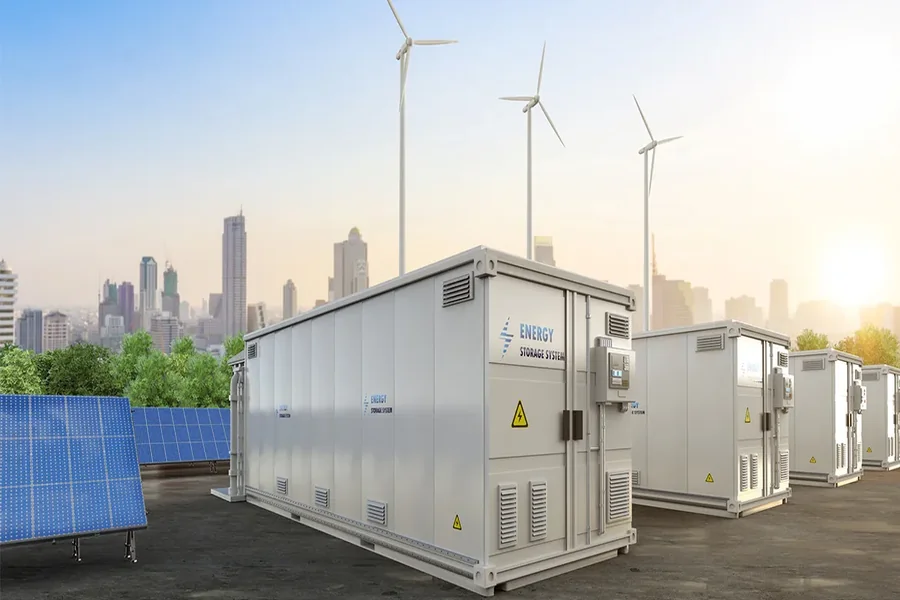
The rapid expansion of renewable energy has transformed how power is generated, stored, and distributed. At the heart of this transition are Battery Energy Storage Systems (BESS), which allow utilities, industries, and communities to store electricity for when it’s needed most. While much attention is given to the batteries and grid integration, an often-overlooked component is just as critical: BESS foundations.
Why Specialized BESS Foundations Are Essential
Unlike traditional structures, BESS units present unique engineering challenges. Each modular container can weigh several tons, and projects often involve hundreds of units installed side by side. These systems must withstand significant static loads, dynamic forces during installation, and environmental stress over decades of service life.
Without proper foundations, even the most advanced storage technologies risk performance issues or safety concerns. Foundations must ensure:
- Structural stability for heavy modular units
- Durability against shifting soils, weather extremes, and seismic forces
- Scalability for large utility-scale installations
- Efficiency to support rapid construction timelines
In short, BESS foundations are not a one-size-fits-all solution—they must be engineered for resilience and repeatability.
Modern Approaches to BESS Foundations
As energy infrastructure scales, so too must construction methods. Several foundation strategies have proven effective for BESS projects:
1. Precast Concrete Pads
High-volume precast concrete pads are increasingly favored for BESS sites. Companies with advanced production capacity, like Heldenfels Enterprises, can manufacture thousands of uniform pads with strict quality control. These precast systems reduce on-site labor, shorten installation time, and provide predictable performance across large deployments.
For example, in Texas—a hub for renewable energy growth—precast pads have been used to support over 2 GW of BESS, showcasing both scalability and long-term reliability.
2. Screw Piles and Helical Piles
In areas where soil conditions are variable, screw piles and helical piles offer an adaptable solution. These deep foundation systems are mechanically advanced into the ground, minimizing excavation and environmental disturbance. They provide excellent load-bearing capacity and can be quickly installed with minimal curing time, which is ideal for fast-moving projects.
3. Hybrid Systems
Some sites combine precast pads with deep foundation elements, balancing the speed of prefabrication with the stability of piles. This hybrid approach ensures structural integrity while optimizing cost and installation schedules.
Engineering Benefits Beyond Stability
Strong BESS foundations do more than just hold weight. They directly influence the efficiency and sustainability of renewable energy projects:
- Installation Speed: Precast and modular designs accelerate project timelines, which is critical as utilities race to expand grid capacity.
- Quality Assurance: Factory-controlled production ensures consistent strength and performance across all units.
- Sustainability: Modern concrete mixes and minimal site disturbance techniques reduce environmental impact.
- Scalability: Uniform systems allow developers to replicate success across multiple projects with confidence.
Real-World Applications in Texas and Beyond
Texas has become a proving ground for utility-scale BESS projects, where renewable energy integration demands fast and reliable deployment. With its established manufacturing capacity, Heldenfels Enterprises has delivered more than 3,000 foundations to support large-scale storage facilities. This scale demonstrates not only technical capability but also the growing role of BESS in stabilizing renewable-heavy grids.
Across the U.S. and internationally, similar approaches are being adopted to meet the accelerating demand for energy storage. By investing in strong foundation strategies, developers ensure these critical assets operate safely and efficiently for decades.
Building a Reliable Energy Future
As renewable energy continues to grow, the success of large-scale storage will depend as much on what’s beneath the batteries as on the technology inside them. BESS foundations are the unsung heroes of energy infrastructure—quietly providing the stability, speed, and scalability required for the grid of tomorrow.
To learn more about industrial-scale foundation solutions for energy and marine projects, visit https://heldenfels.com/marine-industrial/.
